Singapore homeowners often want to keep a window open for ventilation without inviting mosquitoes into the room. The same window may also need privacy, glare control or stronger light blocking at another time of day. A 2-in-1 insect screen and blind combines these functions in one coordinated window setup.
BlindXpert’s BX MultiPro Screen can be configured as a single-layer insect screen, a single-layer roller blind or a dual-layer combination. For a dual-layer setup, the screen choice—HD Insect Screen or Anti-Scratch Pet Mesh—is paired with a Dimout or Blackout blind according to the room and household needs.
This guide explains how a 2 in 1 insect screen and blind in Singapore differs from a single-layer system, how to choose the two layers, and what the real BlindXpert installation photos reveal about window space, handles and grilles.
Photo note: The installations shown below are real BlindXpert examples from different windows. They illustrate product configurations and site conditions; they are not presented as one customer project.
What Is a 2-in-1 Insect Screen and Blind?
A single-layer window solution performs one main job. An insect screen helps protect an open window from insects, while a roller blind manages light and privacy. A dual-layer setup brings a selected screen and a selected blind into the same window system, so the homeowner does not have to choose only one function.
The exact configuration must still suit the window. Available mounting space, window handles, existing grilles, opening direction and access for daily use all affect what can be installed.
How the Dual-Layer System Works
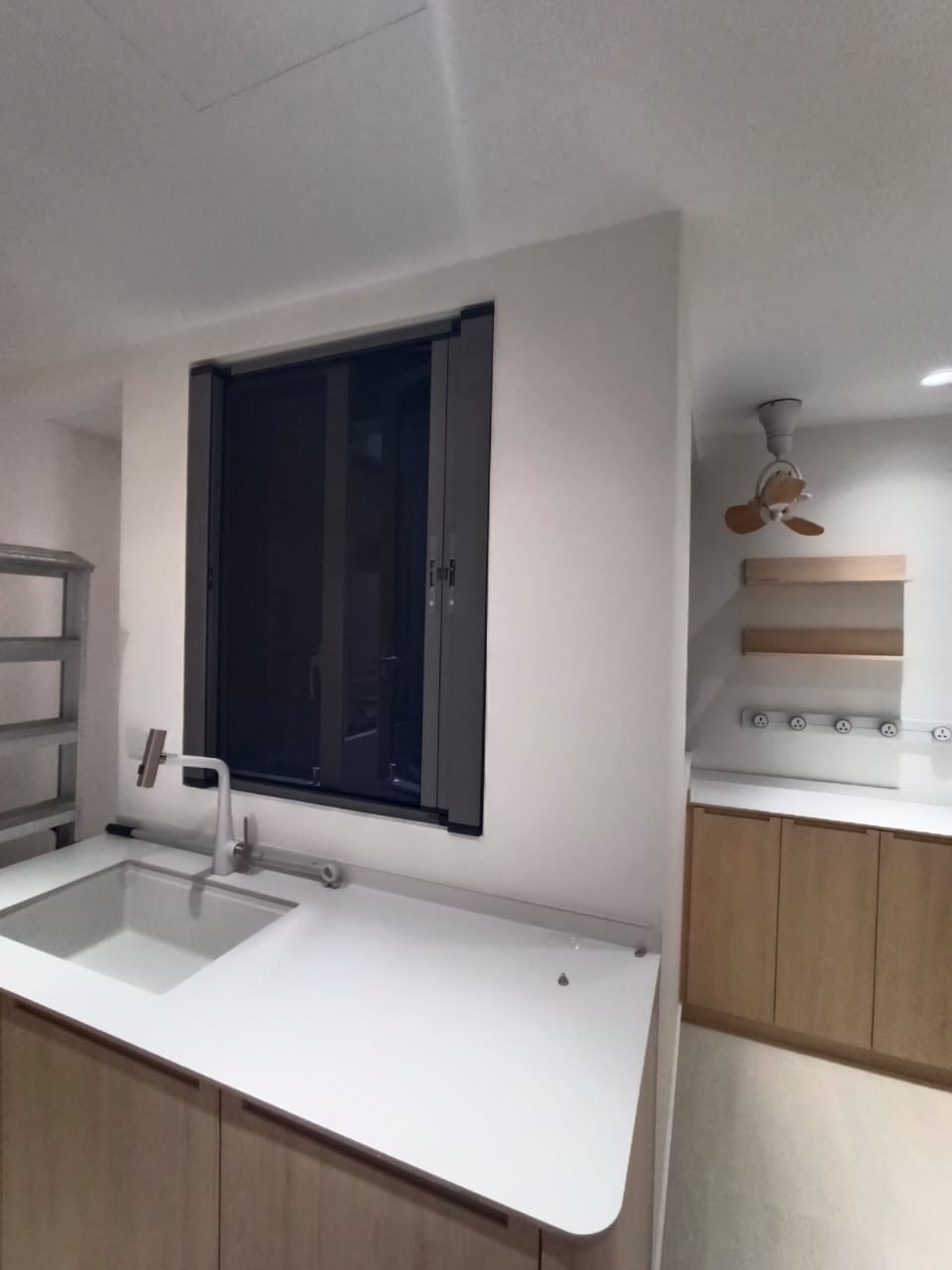
The two layers serve different purposes:
- The screen layer is chosen for insect protection and ventilation. BX MultiPro offers HD Insect Screen or Anti-Scratch Pet Mesh.
- The blind layer is chosen for light and privacy. Dimout provides softer daylight and glare reduction, while Blackout provides stronger light blocking and privacy.
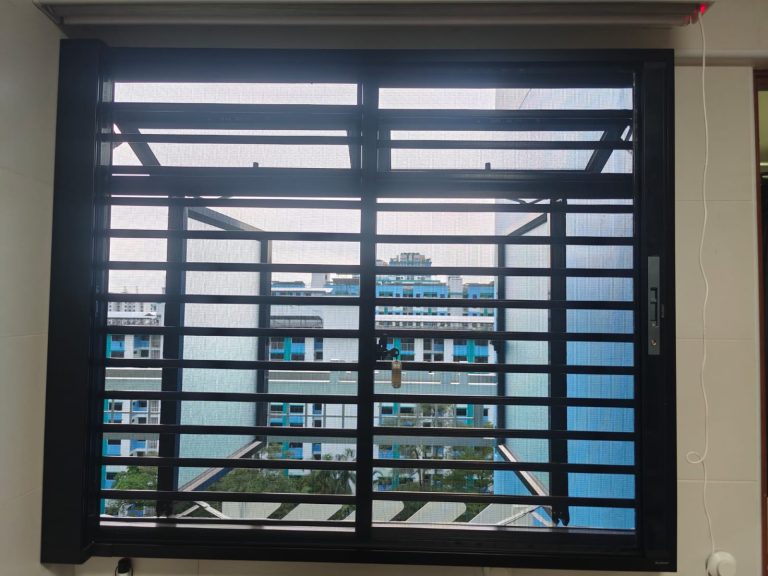
In the real kitchen installation shown here, the insect screen is positioned across the opening while the sunshade layer is stored away. This is the useful daytime state when ventilation and insect protection are the priority.
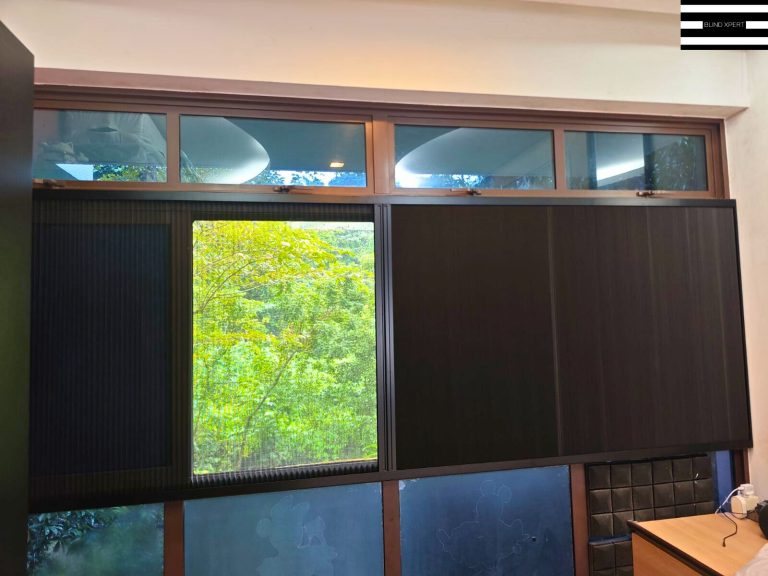
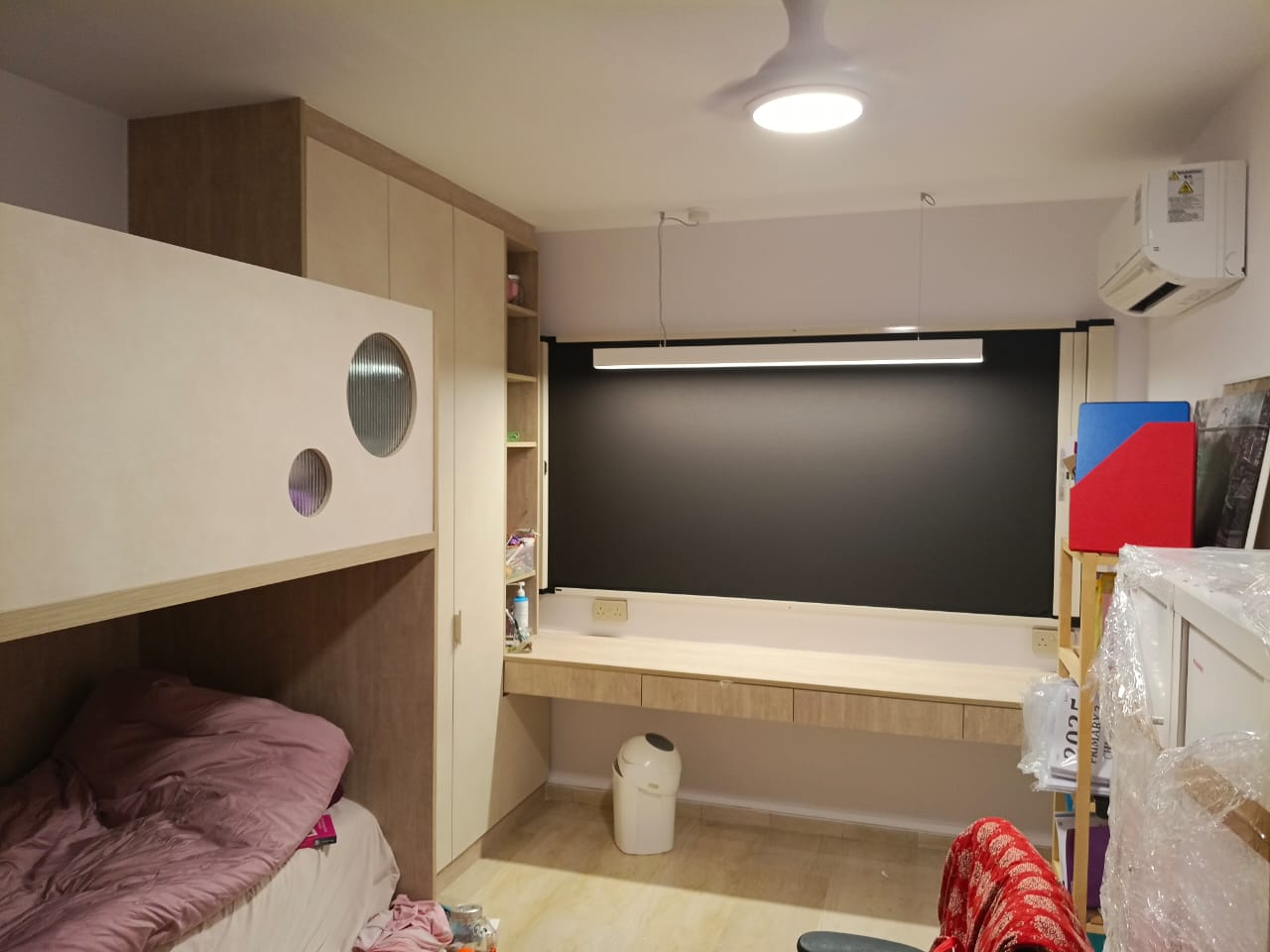
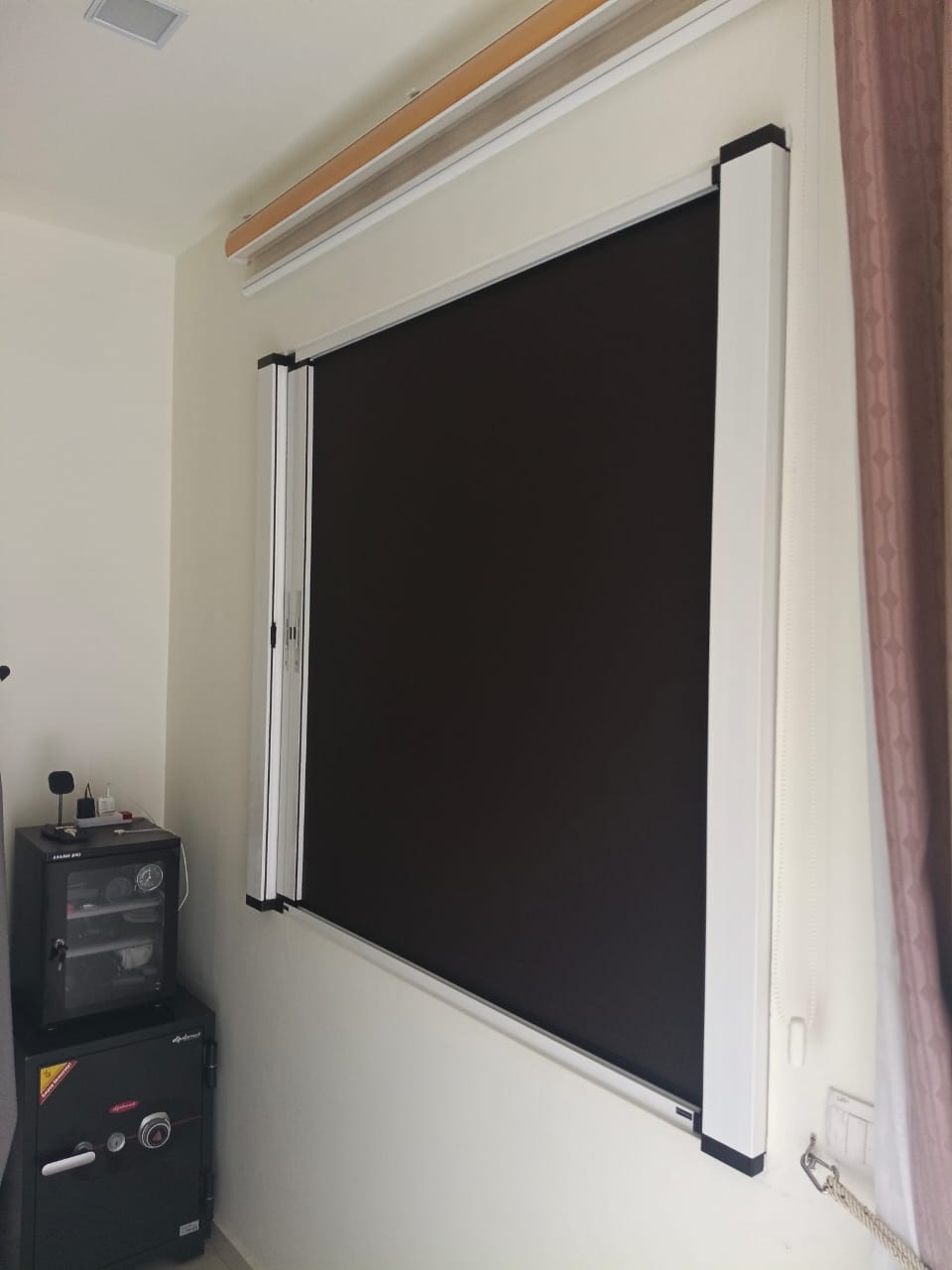
When stronger light control or privacy is needed, the blind layer can be used according to the selected configuration. The full-cover BlindXpert examples show how the dark blind spans the window opening while the system frame remains visible around the perimeter.
Operating direction and clearances can vary by window. BlindXpert should check the actual opening before confirming a setup.
Single-Layer vs Dual-Layer: What Is the Difference?
| Setup | Main use | What it does not combine |
|---|---|---|
| Single-layer insect screen | Ventilation with insect protection | No integrated Dimout or Blackout layer |
| Single-layer roller blind | Light control and privacy | No integrated insect-screen layer |
| Dual-layer screen + blind | Insect protection plus the selected privacy/light-control function | Requires enough suitable installation space for both functions |
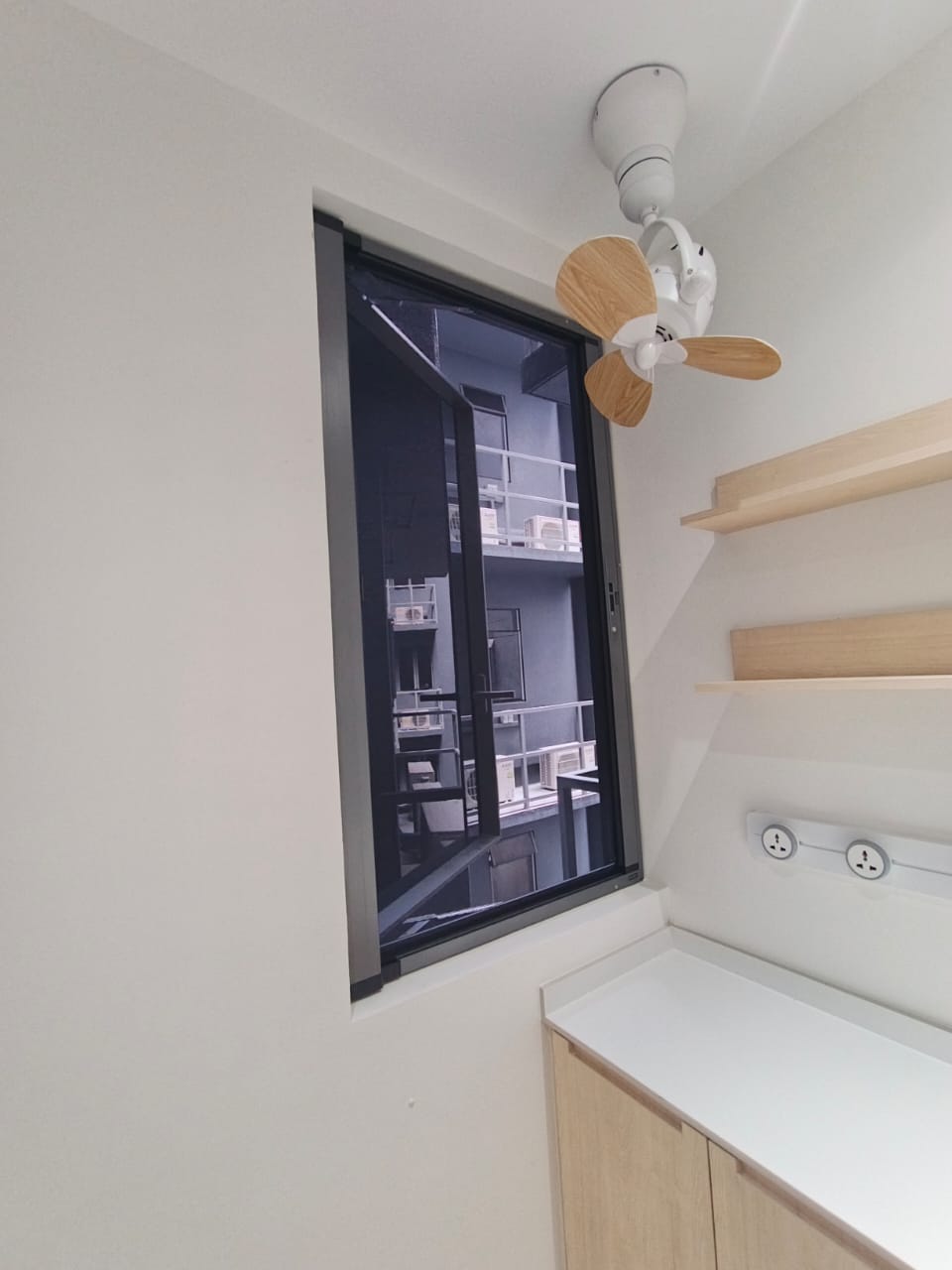
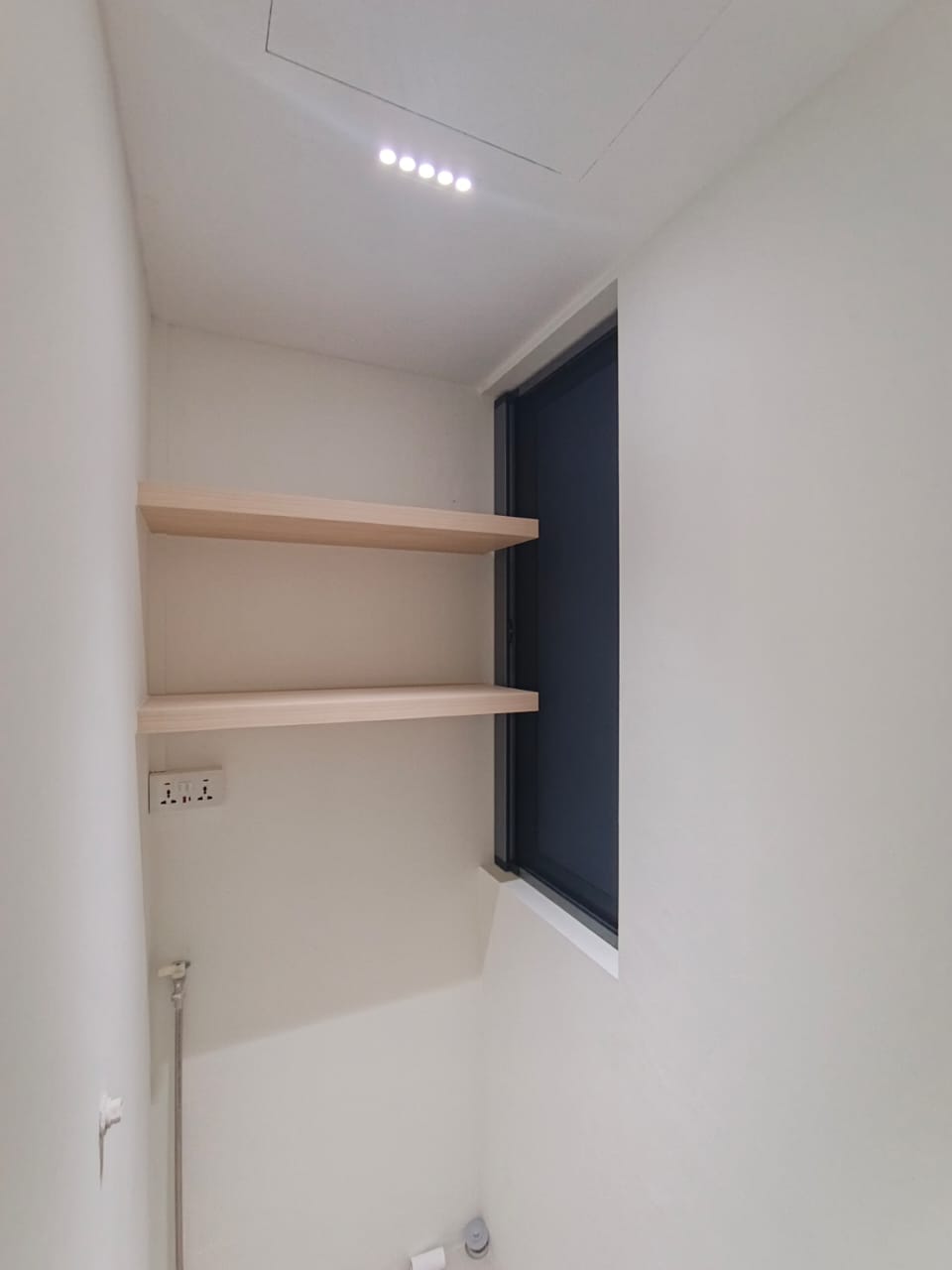
The single-layer insect-screen photo shows a compact installation where the homeowner’s priority is the screen itself. The separate single-layer sunshade example shows the opposite choice: one layer dedicated to shading. A dual-layer system is considered when both functions are required at the same window.
Choosing the Right Two Layers
HD Insect Screen + Dimout
Choose this combination when the priority is insect protection, ventilation and softer daylight. It can suit living rooms, study rooms or other spaces where some daylight is welcome but glare and daytime exposure need to be moderated.
HD Insect Screen + Blackout
This pairing adds stronger light blocking to insect protection. It may be considered for bedrooms or rooms where outside brightness affects rest and privacy.
Anti-Scratch Pet Mesh + Dimout
Pet Mesh is the upgraded screen choice for households that need better scratch resistance than ordinary insect mesh. Pairing it with Dimout keeps the focus on pet-friendly durability, insect protection and softer daytime light.
Anti-Scratch Pet Mesh + Blackout
This combination is designed for a pet-friendly window that also needs stronger privacy and light blocking. It may be relevant to bedrooms used by households with cats or other pets.
Pet Mesh should not be described as a child-safety grille or fall-protection product unless a specific approved specification says so. For the confirmed BX MultiPro options, see the BX MultiPro Screen product page.
Where a 2-in-1 System Can Be Useful
Bedrooms
A bedroom may need ventilation and insect protection at one time, then stronger privacy and light blocking for sleep. HD Insect Screen + Blackout or Anti-Scratch Pet Mesh + Blackout can address those different priorities in one window configuration, subject to a site check.
Living Rooms and Study Areas
These spaces often benefit from daylight but can experience glare or a lack of daytime privacy. A screen paired with Dimout can balance insect protection with softer light.
Kitchens and Utility Areas
The real dual-layer photo shows a compact kitchen window above a countertop. With the screen in use and the blind stored away, the window retains its insect-protection function without the blind covering the opening. The visible shelves, sink and nearby fittings also show why accurate measurement matters in a working area.
Not every kitchen window needs two layers. The separate single-layer example in the same type of compact environment shows that a screen-only solution may be enough when shading and privacy are not priorities.
Window Type, Grilles, Handles and Installation Space
A 2-in-1 system should not be selected from the room type alone. The existing window construction must be checked first.
- Window operation: A casement handle, sliding panel or other moving part needs enough clearance to remain usable.
- Existing grille: The position and depth of a grille can affect where the screen frame may sit.
- Side and perimeter space: A dual-layer frame needs a suitable mounting area around the opening.
- Nearby fittings: Shelves, pipes, switches, curtain tracks and other fixtures can restrict access or frame placement.
- Cleaning access: Both the window and the selected layers should remain practical to reach.
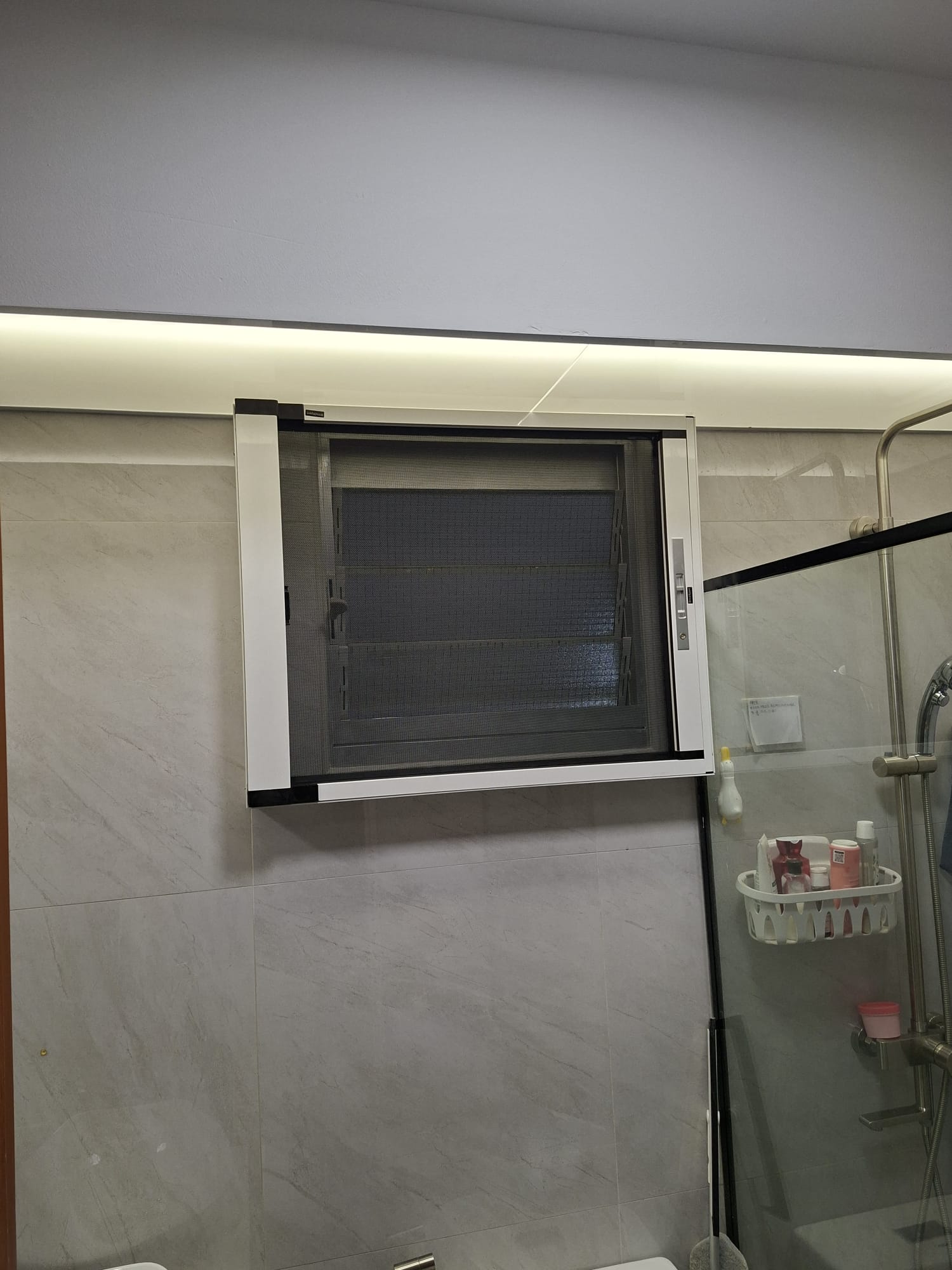
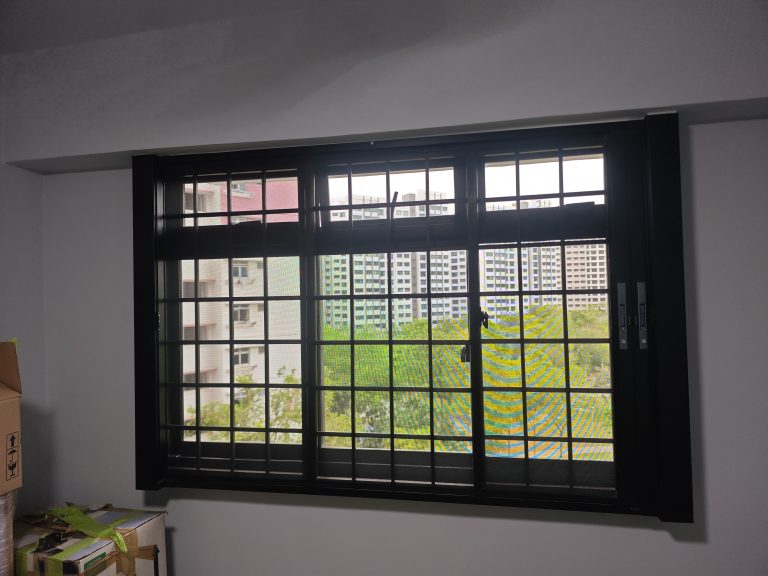
The bathroom example shows a real single-layer insect screen installed in front of a window with an existing handle and grille. It confirms that such conditions can sometimes be accommodated, but it is not a guarantee for every window. The available depth, handle movement and grille position still need to be assessed individually.
For a broader comparison by window design, read Which Insect Screen Works Best for Singapore Windows?
What the Real BlindXpert Photos Show
- A dual-layer configuration can present a full-cover blind state across the opening.
- The same product category can be shown with the insect-screen layer in use and the blind stored away.
- The side housings and surrounding frame occupy real space, so the wall and window perimeter must be measured.
- Compact kitchen and bathroom windows require attention to countertops, shelves, grilles and handles.
- A single-layer solution remains useful when only insect protection or only shading is required.
Daily Operation and Cleaning
Use each layer for its intended job: the screen when ventilation and insect protection are needed, and the selected blind when privacy or light control is the priority. Do not force the system if a handle, grille or nearby fitting obstructs movement.
Cleaning requirements depend on the chosen screen and blind configuration. Before ordering, ask how each layer is accessed and what cleaning method BlindXpert recommends for that exact setup. Keep the window area and tracks free from loose objects, and follow the product-specific care guidance supplied for the installation.
Frequently Asked Questions
Is a 2-in-1 insect screen and blind the same as a single insect screen?
No. A single-layer insect screen is selected mainly for ventilation and insect protection. A 2-in-1 setup pairs a screen layer with a Dimout or Blackout blind so the same window can also address light and privacy needs.
Can I choose Pet Mesh instead of an insect screen?
Yes. BlindXpert lists Anti-Scratch Pet Mesh as an alternative screen layer in BX MultiPro dual-layer combinations. It is intended for households that want better scratch resistance for pet-friendly use.
Should I choose Dimout or Blackout?
Choose Dimout when softer daylight, daytime privacy and glare reduction are the priorities. Choose Blackout when stronger light blocking and privacy are more important, such as in many bedrooms.
Can a 2-in-1 system fit a window with an existing grille or handle?
Sometimes, but it depends on the available depth, frame space and how the handle and grille are positioned. BlindXpert has real single-layer examples that accommodate these conditions, but a dual-layer configuration needs its own site assessment.
Does every room need a dual-layer system?
No. A single-layer insect screen may be sufficient for a kitchen or utility window that mainly needs ventilation and insect protection. A single-layer blind may be enough where only shading or privacy is required. Dual-layer is most relevant when both functions are needed at the same window.
How do I know whether my window has enough installation space?
Send BlindXpert a clear front view of the full window, plus side-angle photos showing the frame depth, handles, grilles and nearby fittings. Approximate measurements can help the team advise what should be checked before a final measurement.
Get a Window-Specific Recommendation
Every window is different. Send BlindXpert your window photos and approximate measurements on WhatsApp so the team can review the window type, handles, grilles and available installation space before recommending a single-layer or dual-layer BX MultiPro Screen setup.
Where an existing window grille is already in place, the available depth and handle clearance may determine which configuration is practical. Read about insect screen options for grille-fitted windows before arranging a measurement.