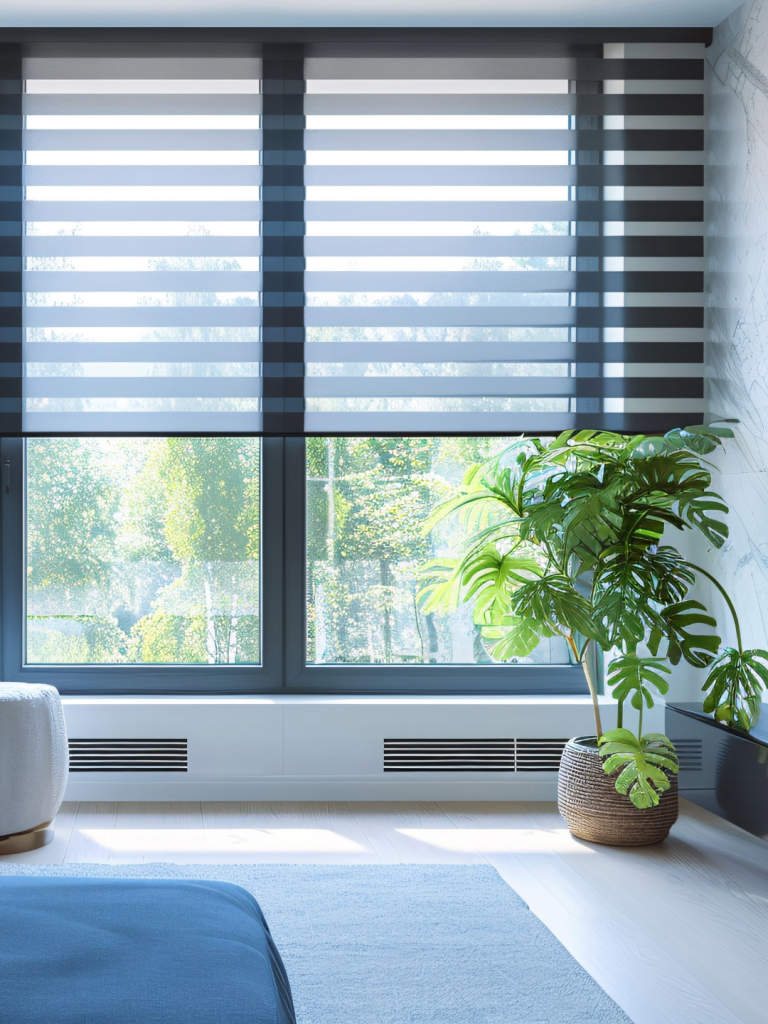
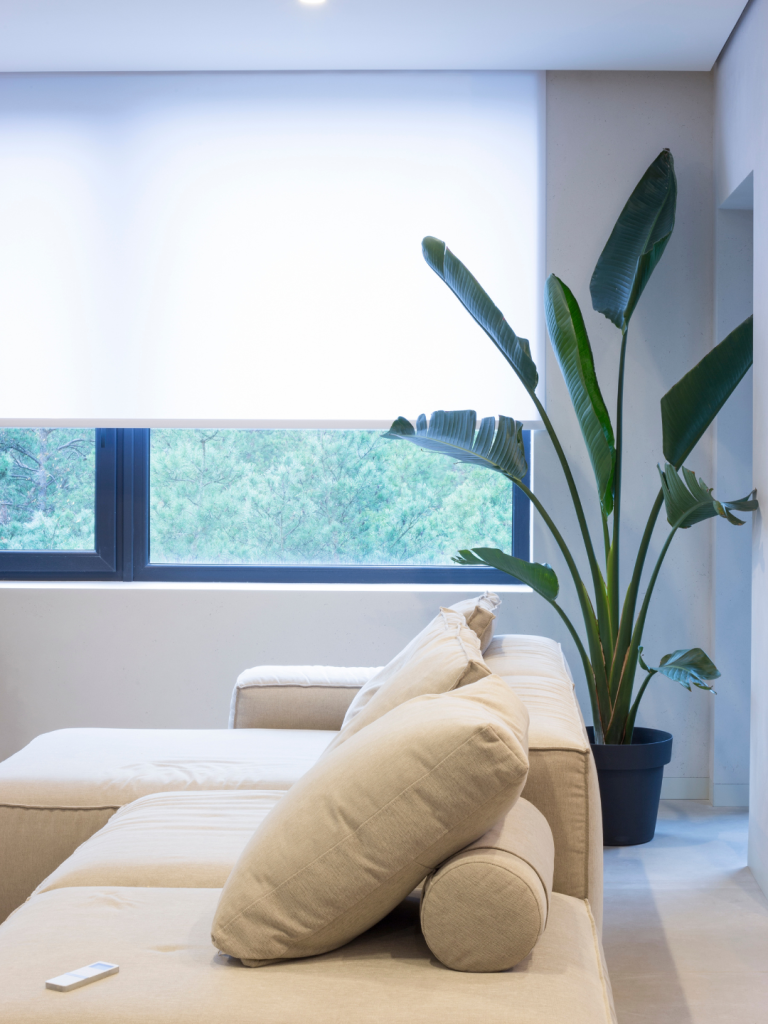
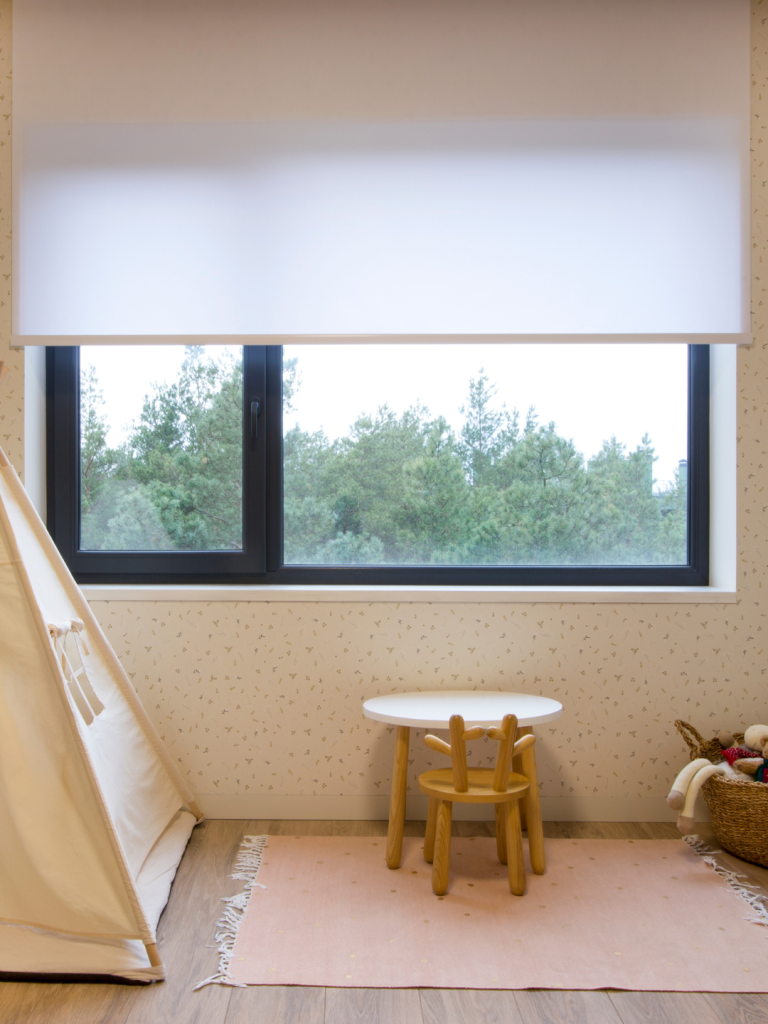

Roller blinds provide a clean, compact window treatment for living rooms, bedrooms and studies.
Roller blinds are one of the most practical window-covering options for Singapore homes. Their simple structure works well in compact HDB bedrooms, condominium living rooms and home offices where homeowners want privacy and light control without adding bulky layers around the window.
Not every roller blind performs in the same way. Fabric opacity, colour, installation position, window direction and operating system all affect the result. A blind chosen for a west-facing living room may need a different specification from one installed in a bedroom or study.
This guide explains how roller blinds work, the main fabric options, where they are most useful and what to check before requesting a quotation for an HDB flat, condominium or landed home.
What Are Roller Blinds?
A roller blind consists of a single panel of fabric attached to a roller tube above the window. When raised, the fabric rolls neatly around the tube. When lowered, it covers the window to provide shading, privacy or room darkening, depending on the selected material.
Compared with curtains, roller blinds occupy less visual space and sit closer to the window. Compared with Venetian blinds, they have no individual horizontal slats to dust. Their compact structure is one reason they are commonly considered for smaller rooms and minimalist interiors.
Main advantages
- Clean and uncomplicated appearance
- Compact installation around the window
- Easy everyday operation
- Different colours and opacity levels
- Manual and selected motorised options
- Relatively simple routine maintenance
Points to understand
- The blind moves as one fabric panel
- Side gaps may allow some light to enter
- Fabric choice affects privacy and brightness
- Large windows may require separate panels
- Handles and opening direction affect installation
Why Roller Blinds Work Well in Singapore Homes
Singapore homes often need to balance daylight, privacy and limited space around the window. HDB and condo windows may face another block, a common corridor, a road or strong afternoon sunlight. Full-length curtains create a softer finish, but they may not suit every room or furniture layout.
Roller blinds provide a compact alternative. They can sit close to the window, allowing the surrounding wall to remain visually clean and reducing interference with desks, cabinets, bedheads or built-in carpentry.
For a broader comparison of roller, zebra, honeycomb, Venetian and Roman blinds, see our guide to types of blinds in Singapore.
Compact rooms
The blind remains close to the window instead of extending across a wider wall area.
Privacy
A lowered blind can cover direct views from neighbouring units or common corridors.
Screen glare
Appropriate fabric can reduce brightness falling on televisions and computer monitors.
Modern interiors
The straight lines complement minimalist, Scandinavian and contemporary homes.
Roller Blind Fabric and Light-Control Options
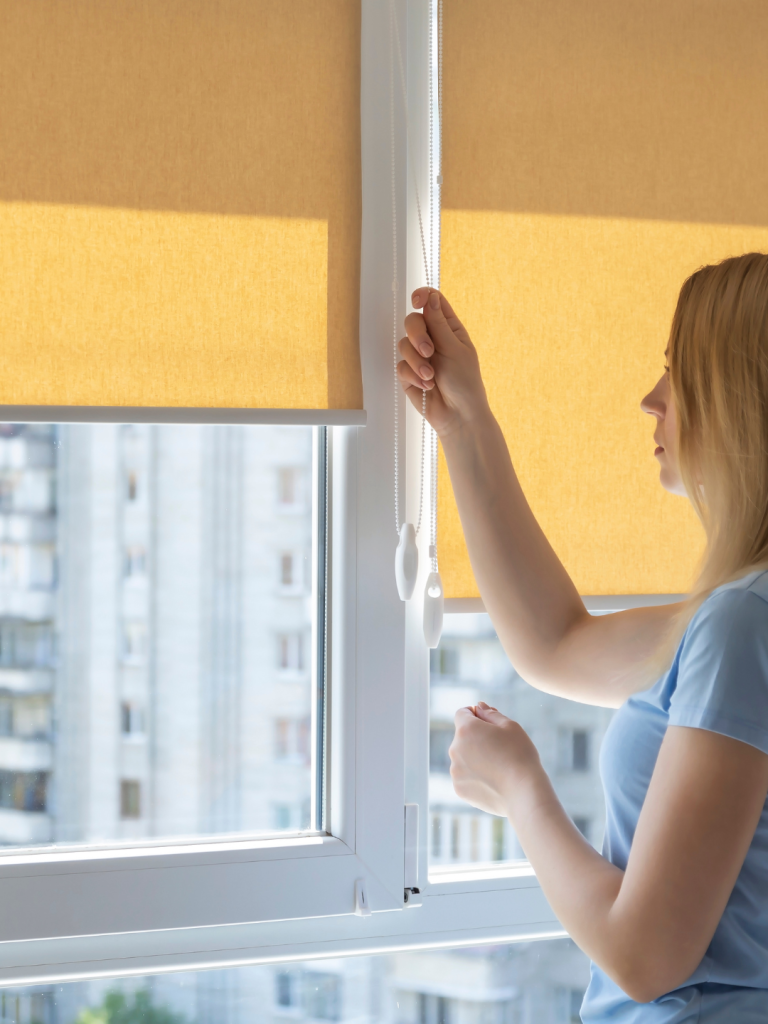
The fabric is the most important part of a roller blind. Terms vary between suppliers and collections, so homeowners should view an actual sample instead of choosing only from a product name.
Light-filtering
Softens daylight and reduces direct brightness while keeping the room relatively bright.
Dimout
Reduces more daylight and offers stronger privacy without aiming for complete darkness.
Blackout-style
Uses a more opaque material for bedrooms, nurseries and rooms used for daytime rest.
How colour affects the room
Lighter colours usually create a softer and more open appearance, while darker fabrics can feel more visually prominent. Ask to view the material against natural daylight because a sample can look different under showroom lighting.
Best Roller Blinds for Each Room
Living room
A light-filtering or dimout option can soften daylight and reduce television glare while keeping the space bright. Separate panels may provide more flexible control across wide windows.
Bedroom
Choose a more opaque fabric when privacy and sleep are priorities. Pay attention to side gaps and early morning light entering around the blind.
Study or home office
The usual goal is to reduce direct glare without making the room unnecessarily dark. Consider the position of the desk and monitor.
Children’s room
A darker fabric may support naps and earlier bedtimes. Chain-operated blinds should use suitable safety accessories and remain properly secured.
Kitchen
Choose a practical material and keep the blind away from direct heat, flame, heavy grease and water. Confirm the approved cleaning method.
Service yard
Consider ventilation, moisture exposure and window movement. The blind should not interfere with handles, racks or appliances.
Are Roller Blinds Suitable for West-Facing Windows?
Yes, but the fabric and installation need careful selection. West-facing rooms can receive strong afternoon brightness, which may create glare and make the space feel uncomfortable.
A more opaque roller blind can reduce direct sunlight more strongly, while a lighter fabric preserves more daylight. The right choice depends on whether the room is used as a living area, bedroom or home office.
Questions to ask for a west-facing room
- Is the main concern glare, privacy, room darkening or a combination?
- Do you still want daylight when the blind is lowered?
- Does direct sunlight fall on a television, desk or bed?
- Would separate blind panels provide better control?
- Would layering blinds with curtains better suit the room?
Roller blinds reduce sunlight after it has passed through the glass. A very exposed room may also require glazing, exterior shading or other measures as part of a wider solution.
Manual or Motorised Roller Blinds?
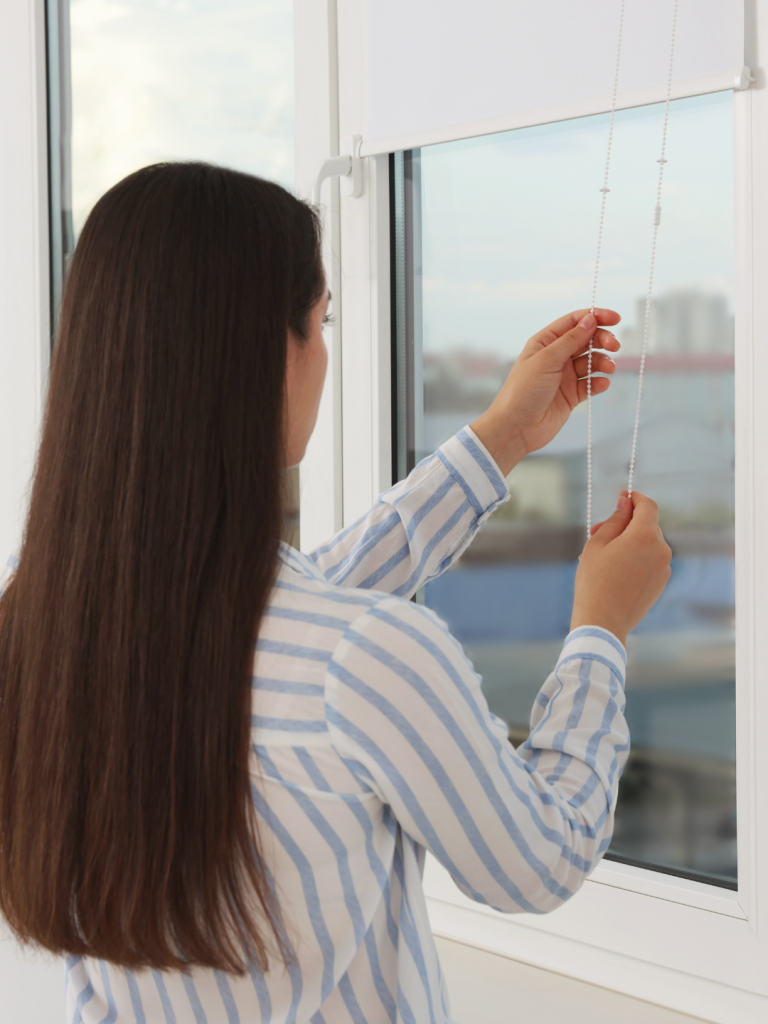
Manual roller blinds
- Suitable for accessible windows
- Simple operation for standard room layouts
- No remote or smart-home setup required
- Practical when blinds are adjusted individually
Motorised roller blinds
- Useful for large or difficult-to-reach windows
- Convenient when several blinds operate together
- Suitable for planned home automation
- May use compatible remotes, switches or systems
Motorisation is easiest to plan before renovation is complete, especially when concealed wiring or a nearby power point is preferred. The correct motor and control method depend on dimensions, installation conditions and system compatibility.
Learn more about BlindXpert smart-home integration.
Inside-Recess or Outside-Recess Installation?
The mounting position affects appearance, coverage and light gaps. A site measurement should account for the recess, frame, handles, opening direction and nearby carpentry.
Inside the recess
This can create a neat, integrated appearance when sufficient depth is available. Handles or moving window panels may reduce usable space.
Outside the recess
Mounting beyond the window opening may provide broader coverage and help when the recess is shallow. It occupies more wall area.
Why separate panels may be recommended
Large HDB and condo windows are often divided into sections. More than one blind can allow homeowners to shade one area while leaving another open. It may also make individual blinds easier to operate.
Measurement checklist
- Overall window width and height
- Depth of the recess
- Location of handles and locks
- Window opening direction
- Nearby cabinets, desks, beds and air-conditioning units
- Existing tracks, pelmets or false ceilings
- Power access for motorised systems
- Preferred overlap around the window
Roller Blinds vs Other Window Treatments
| Option | Best known for | Light adjustment | Visual style | Consider when |
|---|---|---|---|---|
| Roller blinds | Simple, compact coverage | Raise or lower one fabric panel | Minimal and structured | You want practicality and a clean window area |
| Zebra blinds | Alternating sheer and solid bands | Flexible daytime alignment | Modern and layered | You adjust light and privacy frequently |
| Honeycomb blinds | Cellular fabric and flexible configurations | Depends on fabric and opening system | Soft but structured | Privacy and top-down bottom-up operation matter |
| Curtains | Soft, full-height fabric coverage | Can use day and night layers | Decorative and flowing | You want a floor-to-ceiling interior feature |
Explore BlindXpert’s range of indoor blinds and curtains before deciding which format suits each room.
What Affects the Cost of Roller Blinds in Singapore?
A useful quotation should be based on the actual windows and selected specification. Comparing only a headline price may overlook differences in fabric, controls, panel arrangement or installation.
Window dimensions
Width, drop and the number of panels affect the amount of material and hardware required.
Fabric selection
Collections, textures, opacity levels and finishes may be priced differently.
Manual or motorised
Motors, controls, power arrangements and smart-home compatibility affect the specification.
Installation conditions
Height, access, recess limitations and special mounting requirements may affect installation.
Before confirming an order, check whether measurement, installation, controls and required accessories are included. BlindXpert provides custom measurement and professional installation for local homes.
How to Clean and Maintain Roller Blinds
Roller blinds are generally straightforward to maintain because the material forms one flat surface. The correct method still depends on the selected fabric.
- Lower the blind fully before cleaning.
- Remove loose dust with a soft duster or gentle brush attachment.
- Spot-clean only when allowed by the fabric-care instructions.
- Avoid harsh chemicals, heavy scrubbing or soaking unless approved.
- Allow damp areas to dry completely before rolling the blind up.
- Keep the chain, brackets and roller area free from obstructions.
Common Roller Blind Selection Mistakes
Choosing only by colour
Two fabrics in a similar colour can provide very different privacy and light-control results. Compare opacity and view the material against daylight.
Expecting complete darkness from a standard installation
Even an opaque fabric may allow light around the edges. Discuss mounting position and expected gaps when bedroom darkness matters.
Ignoring the window handle
Handles, locks and opening panels may interfere with the fabric or bottom bar and should be checked during measurement.
Using one oversized blind without considering daily use
A single wide blind may appear simple, but separate panels can offer better flexibility across different parts of the window.
Planning motorisation too late
Waiting until renovation is complete may limit concealed power options. Discuss motorisation early when it is part of the intended home setup.
Frequently Asked Questions
Are roller blinds suitable for HDB flats?
Yes. Their compact structure suits HDB bedrooms, living rooms, studies and service yards. Fabric and panel layout should follow the room’s direction, use and privacy needs.
Are roller blinds suitable for condo windows?
Yes. Roller blinds can be customised for different condo window sizes and interior styles. Larger windows may use separate panels or selected motorised systems.
Do blackout roller blinds make a bedroom completely dark?
An opaque fabric can block strong light through the material, but a standard roller blind may still have light entering around its edges. Installation position and overlap affect the result.
Which roller blind is best for a living room?
A light-filtering or dimout-style material is often useful when the aim is to reduce glare and improve privacy without making the living room too dark.
Which roller blind is best for a bedroom?
A more opaque room-darkening or blackout-style fabric is usually more suitable when privacy and sleep comfort are priorities. Side gaps should also be considered.
Can roller blinds be motorised?
Selected roller blind systems can support motorised operation, depending on dimensions, motor compatibility, control method and power arrangement.
Are roller blinds easy to clean?
The flat surface makes routine dust removal relatively straightforward. Check the fabric-care instructions before using water or cleaning products.
Should roller blinds be installed inside or outside the recess?
Both can work. Inside-recess mounting creates an integrated look when enough space is available. Outside-recess mounting may provide broader coverage. Window structure should guide the decision.
Choose Roller Blinds for Your Home
Arrange a consultation with BlindXpert to compare fabric samples, opacity levels, colours and operating options. The team can measure your windows and recommend a suitable configuration for your HDB, condo or landed home.